

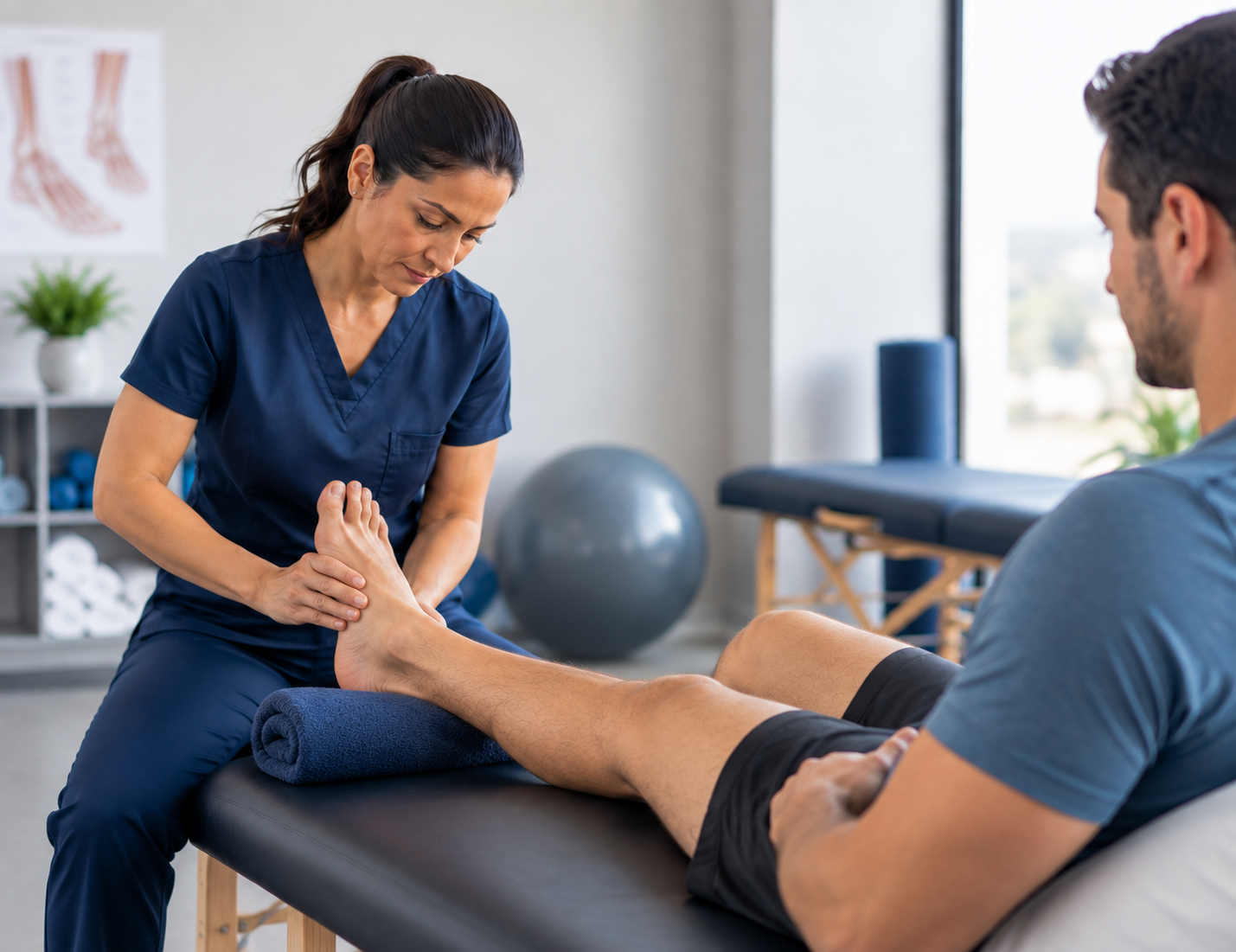
Balance is a complex biological ability that most people take for granted until it begins to degrade. As individuals age, maintaining an upright posture and navigating uneven surfaces requires active communication across multiple bodily systems. When sensory feedback slows or muscle strength declines, simple missteps can escalate into life-altering falls. Physical therapy provides a structured, clinically proven intervention that addresses the root causes of instability, retrains physiological coordination, and restores functional independence for older adults.
The Multisensory Systems Behind Upright Balance
Human balance relies on three primary sensory inputs working in harmony with the brain and musculoskeletal system. A deficit in any one of these areas increases fall vulnerability, but targeted therapeutic exercises help compensate for sensory loss.
The visual system provides essential spatial orientation, allowing the brain to gauge depth, identify obstacles, and anticipate changes in terrain. Age-related eye conditions such as cataracts, glaucoma, or macular degeneration diminish these visual cues, forcing reliance on other senses.
The somatosensory system uses specialized nerve receptors located in the soles of the feet, ankles, and joints to detect pressure, movement, and ground incline. Peripheral neuropathy, common in diabetes, severely dampens this feedback loop, leaving individuals unsure of where their feet are positioned in space.
The vestibular system, housed within the inner ear, functions as the body’s internal gyroscope. Fluid-filled canals and tiny sensory hairs detect head movement, gravitational pull, and spatial acceleration. Degeneration within these inner ear structures causes dizziness, vertigo, and spatial disorientation during basic movements like turning the head or standing up quickly.
Muscle Atrophy and Neuromuscular Reaction Time
Age-related loss of muscle mass, known medically as sarcopenia, disproportionately affects fast-twitch muscle fibers. These specialized muscle fibers generate rapid bursts of force necessary to catch oneself after stumbling over a rug or slipping on a slick surface.
When fast-twitch fibers shrink and slow down, an older adult may recognize that they are losing their balance, but their limbs cannot produce force rapidly enough to step forward and arrest the momentum. Physical therapy targets this neuromuscular lag through dynamic balance drills and progressive resistance exercises that force motor neurons to fire faster and recruit dormant muscle fibers.
Core Components of a Fall-Prevention Physical Therapy Program
A physical therapist designs an individualized balance rehabilitation plan following a comprehensive baseline assessment. This plan systematically targets deficits across multiple physiological systems.
-
Lower-Body Strength Training: Strengthening the quadriceps, hamstrings, gluteal muscles, and calves provides the physical foundation necessary to support the torso, rise from chairs without using armrests, and climb steps securely.
-
Proprioceptive and Sensory Retraining: Exercises performed on varying surfaces, such as firm floors, high-density foam balance pads, and rocker boards, challenge the nervous system to process shifting base-of-support feedback.
-
Vestibular Adaptation Drills: Movements that combine head rotations with eye tracking, such as gaze stabilization drills, recalibrate the relationship between visual tracking and inner ear fluid movement.
-
Dynamic Gait and Agility Work: Therapists guide patients through obstacle courses, heel-to-toe tandem walking, lateral crossover steps, and sudden directional changes to mirror unexpected everyday obstacles.
-
Dual-Task Cognitive Challenges: Performing physical balance exercises while simultaneously answering conversational questions, counting backward, or carrying an object mimics real-world situations where divided attention often triggers an accidental slip or trip.
How to Measure Your Home Correctly Before Ordering Bulky Furniture
Ordering large home furnishings like sectional sofas, solid wood dining tables, entertainment centers, or bedroom armoires should be an exciting upgrade to your living environment. However, failing to measure the transit pathway into your home often results in delivery refusals, return shipping expenses, restocking fees, and accidental wall damage. Taking precise dimensions of the placement area, doorways, and intermediate transit choke points ensures that large pieces make it smoothly into their intended space.
Preparing the Necessary Measuring Equipment
Accurate spatial measurements require reliable equipment and careful recording. Using the wrong tools can lead to inaccurate estimates that cause significant problems on delivery day.
-
Rigid Steel Tape Measure: Use a locking tape measure with a wide, stiff blade that can extend several feet horizontally without bowing or collapsing.
-
Low-Tack Painter’s Tape: Use non-marking tape to map out physical footprints directly onto hard surfaces or carpets without leaving sticky adhesive residues behind.
-
Cardboard Mock-Up Templates: Large pieces of flattened cardboard can help you test clearance through narrow turns and awkward stair landings.
-
Measurement Record Sheet: Keep a dedicated paper notebook or mobile notes document to record exact figures immediately rather than relying on memory.
Step One: Evaluating the Final Room Location
The designated placement zone requires comprehensive assessment well beyond standard floor space. An item must integrate seamlessly into the daily flow of the household.
Measure the primary wall length and depth where the furniture will sit. Be sure to measure from baseboard to baseboard rather than bare drywall, as baseboards, wall heaters, and quarter-round molding reduce usable wall width by several inches.
Leave a minimum clearance zone of 30 to 36 inches around all walkways and open sides. This ensures that household members can walk past comfortably without turning sideways or brushing against corners.
Account for architectural obstructions along walls and ceilings. Note the height of window sills, electrical outlets, wall sconces, thermostats, and HVAC return vents. If an armoire or bookshelf blocks a light switch or prevents a window from opening, its placement becomes impractical.
Lay painter’s tape along the floor matching the exact width and depth of the piece. Leave the outline on the floor for several days. This visual aid allows you to walk the space, test existing walking paths, and confirm that nearby room doors or cabinet drawers will still open fully without collision.
Step Two: Measuring Entryways and Access Points
A piece of furniture might look perfectly proportioned inside a spacious living area, but it must first pass through your exterior and interior doorways.
Open your front door as wide as possible. Measure the narrowest interior gap from the inside face of the door frame to the outer edge of the open door slab. Hinges frequently prevent doors from swinging completely flush with the adjacent wall, shaving two or more inches off the published doorway opening.
Measure the vertical height from the floor threshold to the lowest underside of the upper door frame. Check for raised thresholds or weatherstripping that might reduce clearance height.
Examine exterior approach hazards. Look for narrow porch railings, exterior steps, low overhead awnings, and tight storm door swings that could limit how movers position long sofas or tables prior to entering the house.
Step Three: Navigating Hallways, Turns, and Stairwells
The path between the front door and the destination room contains the highest risk for delivery failures. Hallways and stairwells demand careful diagonal measurements.
-
Hallway Width and Obstructions: Measure hallway widths at their narrowest points, factoring in mounted radiators, picture frames, and projecting light fixtures that cannot be removed easily.
-
Corner Transitions: If an entry path requires a 90-degree turn around an interior corner, measure diagonally from the inside corner to the opposing drywall surface to verify adequate turning room.
-
Staircase Width and Handrails: Measure the distance between the wall and the inner edge of the banister. If clearance is exceptionally tight, check whether the handrail can be temporarily detached before delivery.
-
Stair Overhead Clearances: Stand on each stair tread and measure directly upward to the ceiling or bulkhead above. Low angled ceilings frequently block long furniture transported on its end.
-
Intermediate Landing Depth: Measure the floor area and ceiling clearance on all stair landings. Delivery teams need adequate room to stand tall dressers upright before navigating the next set of steps.
Step Four: Measuring the Target Furniture Piece
Retail specifications can be misleading if you only examine primary height, width, and depth. Delivery accessibility hinges on secondary dimensional attributes.
Look up the diagonal depth of sofas and chairs. This measurement is taken from the highest point of the back frame diagonally down to the front edge of the armrest. If this diagonal depth is smaller than your doorway width, movers can tilt the sofa onto its back and maneuver it through on its side.
Check whether protruding components can be disassembled. Look for removable screw-on legs, detachable headboards, or modular sectional clips. Removing four- to six-inch wooden legs often provides just enough clearance to fit large upholstery through tight openings.
Frequently Asked Questions
Can balance exercises be performed safely at home without direct supervision?
Yes, home exercises are safe when patients follow personalized instructions provided by their physical therapist and maintain safety guardrails, such as placing a sturdy, unmovable chair in front of them or standing in an interior corner where walls provide support on both sides if instability occurs.
How do footwear choices affect balance and stability in older adults?
Footwear plays an important role in stability. Smooth-soled slippers, high heels, and thick, overly cushioned athletic shoes reduce the foot’s ability to sense tactile changes in ground texture, while shoes with thin, firm outsoles, low heels, and non-skid tread optimize sensory feedback and reduce stumbling risks.
What is the difference between static and dynamic balance assessments?
Static balance assessments measure an individual’s ability to hold a stationary upright position with varying bases of support, such as feet together or on one leg, while dynamic balance evaluations test the body’s ability to maintain equilibrium while actively in motion, such as reaching, turning, or walking across uneven terrain.
How does orthostatic hypotension complicate balance therapy?
Orthostatic hypotension is a sudden drop in blood pressure upon standing from a seated or supine position, which triggers temporary cerebral hypoperfusion, dizziness, and sudden loss of consciousness. Therapists account for this by incorporating gradual positional transitions and ankle pumps before standing to facilitate venous return.
What should you do if an exterior hallway has a low decorative chandelier?
Measure the vertical clearance from the floor directly to the lowest hanging crystal or fixture edge. If the fixture drops below the required transit clearance for upright furniture, turn off the dedicated electrical circuit breaker and temporarily uninstall the lighting fixture before the movers arrive.
Why is diagonal depth more important than total sofa length when clearing doors?
Total length only matters if the piece is being moved horizontally. Because long sofas are regularly stood vertically on end or tilted to pivot around doorway casings, the diagonal depth represents the true minimum cross-section that must squeeze between the door jamb and the door stop molding.
How much extra buffer clearance should be factored in beyond manufacturer dimensions?
A practical rule of thumb is to allow at least two to three inches of margin beyond the stated furniture dimensions. This margin accounts for packaging materials, uneven wall plaster, protruding door latch hardware, and the hand clearance necessary for movers to grip and lift the item securely without crushing their fingers against the doorframe.
